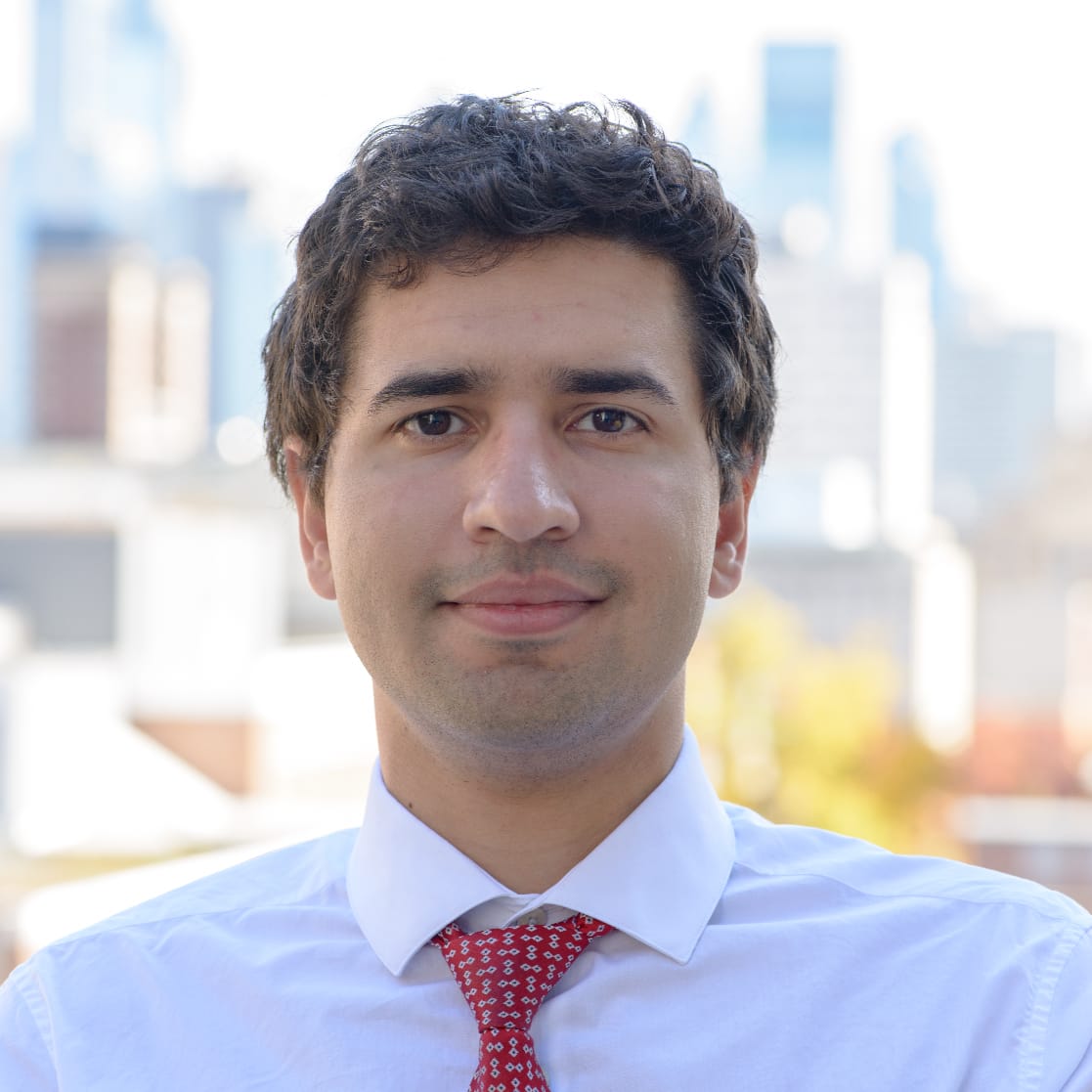
I am an Assistant Professor in the Department of Political Science at the University of Illinois Urbana-Champaign. I study international relations with a focus on human rights, international organizations, and the politics of norm promotion. Before joining Illinois, I was a Postdoctoral Fellow at the Niehaus Center for Globalization and Governance at Princeton University (2023–2024). I hold a PhD in Political Science and an M.A. in Statistics from the University of Pennsylvania (2023), an M.Sc. in International Studies from Torcuato Di Tella University (Argentina, 2018), and a B.Sc. from the University of San Andrés (Argentina, 2011).
My research asks why international efforts to defend human rights sometimes produce reform and sometimes provoke resistance. I approach this as a fundamentally relational problem: the consequences of pressure, criticism, and monitoring in world politics depend not only on what is said or done, but on the relationships between those who exert pressure and those who receive it. Across my work, I examine how states, international organizations, and non-governmental actors attempt to hold one another accountable — and how those attempts reshape institutions, foreign policies, and the domestic politics of targeted states. To answer these questions, I build original large-scale datasets from diplomatic and institutional records, combining computational text analysis, causal inference, and network methods with elite interviews and fieldwork on several continents.
My research has been published or accepted in International Organization, British Journal of Political Science, International Studies Quarterly, Journal of Peace Research, and Journal of Democracy, among others. It has been recognized with the Ken Sherrill Best Dissertation Award in LGBTQ Politics and the LGBTQ Caucus Best Paper Award from the American Political Science Association, and with the Best Article Award of the International Law Section and the Steve Poe Best Graduate Student Paper in Human Rights from the International Studies Association.
Prior to academia, I worked at the MERCOSUR Institute of Public Policy on Human Rights and at the Argentine Council for International Relations (CARI), where I contributed to policy analysis on human rights and multilateral diplomacy in Latin America.
-
2026International Studies Quarterly · with Michael Kenwick and Beth Simmons
-
2026Network Science · with Jared Edgerton and Cecilia Cavero Sánchez
-
2026British Journal of Political Science · with Florencia Montal and María-José Urzúa
-
2026International Organization · with Beth A. Simmons
-
2024Journal of Peace Research
-
2024Journal of Democracy · with María-José Urzúa
-
2024International Studies Perspectives · with Florencia Montal and Patricio Yamin
-
2023Research and Politics 10(3) · with Francisco Urdínez and Federico Merke
-
2023International Studies Quarterly 67(2) · with Florencia Montal
-
2022PS: Political Science and Politics 55(3): 519–524 · with Florencia Montal and Patricio Yamin
-
2021Latin American Politics and Society 63(4): 45–73
-
2015International Journal: Canada’s Journal of Global Policy Analysis 70(4): 613–628 · with Federico Merke
-
2013Theories of International Relations and the Explanation of Foreign AidIberoamerican Journal of Development Studies 2(1): 72–92
-
2013Human Rights Review 14(2): 131–155 · with Federico Merke
-
Forth.Borders as Sites of Human Rights RepressionIn Hillebrecht, C. & Hugland, J. (eds.), What Do We Know About Human Rights? Bloomsbury · with Beth Simmons
-
Forth.International Human Rights Organizations: From Revolution to Irrelevance?In Barnett, M. & Snidal, D. (eds.), Oxford Handbook of International Institutions, Oxford University Press · with Beth Simmons
-
2019In Olivié, I. & Pérez, A. (eds.), Aid Power and Politics, Routledge
-
2017In Riggirozzi, P. & Wylde, C. (eds.), Handbook of South American Governance, Routledge
Why does international pressure for human rights sometimes spark reform and sometimes trigger backlash? My book project addresses that puzzle through the lens of LGBT rights, one of the most contested fault lines in contemporary world politics. I revise condemnation as a three-actor episode — a sender, a target, and the states observing the exchange — and argue that its consequences depend on two things: the identity relationship between critic and audience, and whether a country is the named target or an unnamed observer. Condemnation from outsiders hardens its targets, while its real power operates on observers — states that recognize the critic as one of their own and adjust their behavior before ever being named. Criticism, in this account, is information: it reveals which norms a country’s reference group is willing to enforce. I develop this relational theory with an original corpus of over 350,000 diplomatic statements, a new global panel of LGBT policies, a survey experiment, roughly 150 elite interviews, and case studies of reform and backlash from national legislatures to municipal politics. The book challenges conventional “naming and shaming” accounts and offers a framework for understanding when human rights advocacy succeeds — and when it backfires.
-
Fall ’24–’25Global LGBT Politics (undergraduate)
Fall 2024 · Spring 2025 · Fall 2025 -
Spring ’25International Human Rights (undergraduate)
Spring 2025 · Fall 2025 -
Fall ’26International Human Rights (graduate) Fall 2026
-
2023–2024Data Management and Analysis (graduate)
University of San Andrés -
2021Data Analysis for Development Cooperation (graduate)
National University of San Martín -
2020–2021Graduate Research Design Seminar (graduate)
University Torcuato Di Tella -
2019–2022International Law (undergraduate)
University of Pennsylvania · Instructor: Beth Simmons -
2019International Law & Institutions (undergraduate)
University of Pennsylvania · Instructor: Mark Pollack -
2018International Political Economy (undergraduate)
University of Pennsylvania · Instructor: Ryan Brutger -
2014–2016International Politics (graduate)
Foreign Service Institute, Ministry of Foreign Affairs, Argentina · Instructor: Federico Merke -
2011–2017Theories of International Relations (undergraduate)
University of San Andrés, Argentina · Instructor: Federico Merke